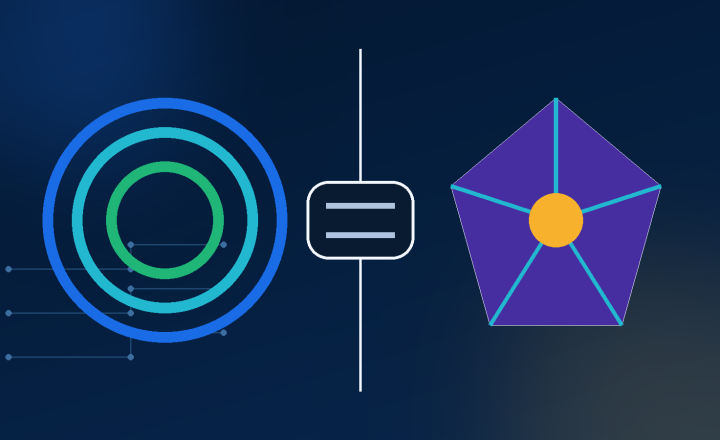

A child should not have to trade away personal information simply because a school wants to experiment with artificial intelligence. That principle sits behind a new agreement announced in the United States—and it is the part Nigerian schools can examine without pretending that an American standard automatically applies here.
On 9 September 2026, the American Federation of Teachers, the United Federation of Teachers and Microsoft announced what they call a National AI Safety and Privacy Standard for schools. Their announcement says the agreement creates protections for students, families and educators. It emerged from negotiations involving the unions and Microsoft, not from the Nigerian government, and it is not Nigerian law.
That distinction matters. A press release about a foreign agreement should not be republished as though it changes the rules for a school in Lagos, Calabar, Kano or Abuja. Its value for Nigerian readers is as a prompt: before a school asks pupils and teachers to use an AI product, what questions must the school be able to answer?
What the announcement changes—and what it does not
The Microsoft announcement describes the standard as legally enforceable in the relationship covered by the agreement. It focuses on safeguards including privacy, transparency, human oversight and limits around the use of data. The precise obligations must be read in the published standard itself; a summary cannot substitute for the full document.
It does not create a global education rule. It does not certify every Microsoft AI product for every child or school. It also does not decide how Nigerian data-protection, education or child-safeguarding requirements apply to a particular deployment.
The careful conclusion is therefore modest: the agreement shows that procurement discussions are moving beyond “What can the tool do?” towards “What information does it collect, who controls the result, and who is responsible when it fails?”
The Nigerian questions schools should ask
1. What student information enters the system?
Schools should map the data before adoption. Names, admission numbers, schoolwork, behavioural records, disability information, photographs, voice recordings and parent contacts do not carry the same risk. A tool that can explain mathematics using an anonymous prompt creates a different exposure from one connected to a learner’s full profile.
Collect only what the task genuinely needs. Do not tell staff to paste report cards, medical information or disciplinary records into a public chatbot merely because it produces a quick summary.
2. Is the AI making a suggestion or making the decision?
A generated lesson outline can be reviewed by a teacher. An automated judgement about admission, discipline, ability or welfare is more consequential. Schools need a named human who can challenge the output, examine the evidence and correct mistakes. “The computer said so” is not accountability.
3. Can parents, teachers and pupils understand what is happening?
A usable notice should explain which tool is being used, its purpose, the information involved, who can access it, how long records are kept and where questions can be raised. A link to a long vendor privacy policy is not the same as a school explaining its own practice.
4. What happens when the connection fails or the product changes?
Nigerian deployments must account for devices, data costs, electricity and uneven connectivity. A class should not become inaccessible to a learner because an AI feature requires continuous high-bandwidth access. Schools should also know how to export work, disable the feature and continue teaching if the supplier changes its product or terms.
5. Has the school tested accuracy in its real context?
An AI system can produce confident errors, misread Nigerian names or contexts, and offer examples that do not fit the curriculum. Teachers should test it on representative tasks, record failures and decide where it must not be used. Testing should include local language, cultural and accessibility needs where relevant.
A sensible adoption sequence
Begin with a limited, low-risk classroom use. Define the educational purpose in one sentence. Review the supplier’s current documentation and contractual terms. Conduct the school’s privacy and safeguarding assessment. Train the teachers who will supervise it. Inform affected families in plain language. Then run a small pilot with a stop condition and a way to report problems.
The success measure should be educational value—not the number of AI prompts sent. Did pupils understand the topic better? Did teachers save time without lowering accuracy? Were any learners excluded? Did staff catch unsafe or fabricated output? Those answers are more useful than a vendor demonstration.
What parents can ask now
Parents do not need technical expertise to ask responsible questions: Is this tool compulsory? What information about my child is uploaded? Can a teacher review and correct its output? Is the child’s work used to train a model? How can I raise an objection or request correction? What non-AI alternative exists?
The new US agreement is news because it shows workers and a technology supplier negotiating boundaries around AI in schools. Its Nigerian relevance is not imitation. It is the reminder that innovation without a clear purpose, data map, human responsibility and exit plan is not readiness.
Frequently asked questions
Does the US standard apply to Nigerian schools? No. It is useful as a reference, but Nigerian organisations must assess their own legal and operational duties.
Should schools ban AI entirely? This announcement does not answer that question. A better starting point is to classify uses by purpose and risk, then permit only those the school can supervise responsibly.
Can a teacher paste a pupil’s records into a public chatbot? A school should not assume this is acceptable. It must assess necessity, authority, provider terms, security and privacy before processing personal data.
Continue reading on Tech Embed
- How Nigerian students can use AI responsibly
- AI privacy guide for Nigerian students and small businesses
Topic hub: Explore more in Artificial Intelligence in Nigeria and Africa.
Sources
- Microsoft announcement, 9 September 2026
- Nigeria Data Protection Commission — use for current Nigerian regulatory materials; no legal conclusion is inferred in this draft.