






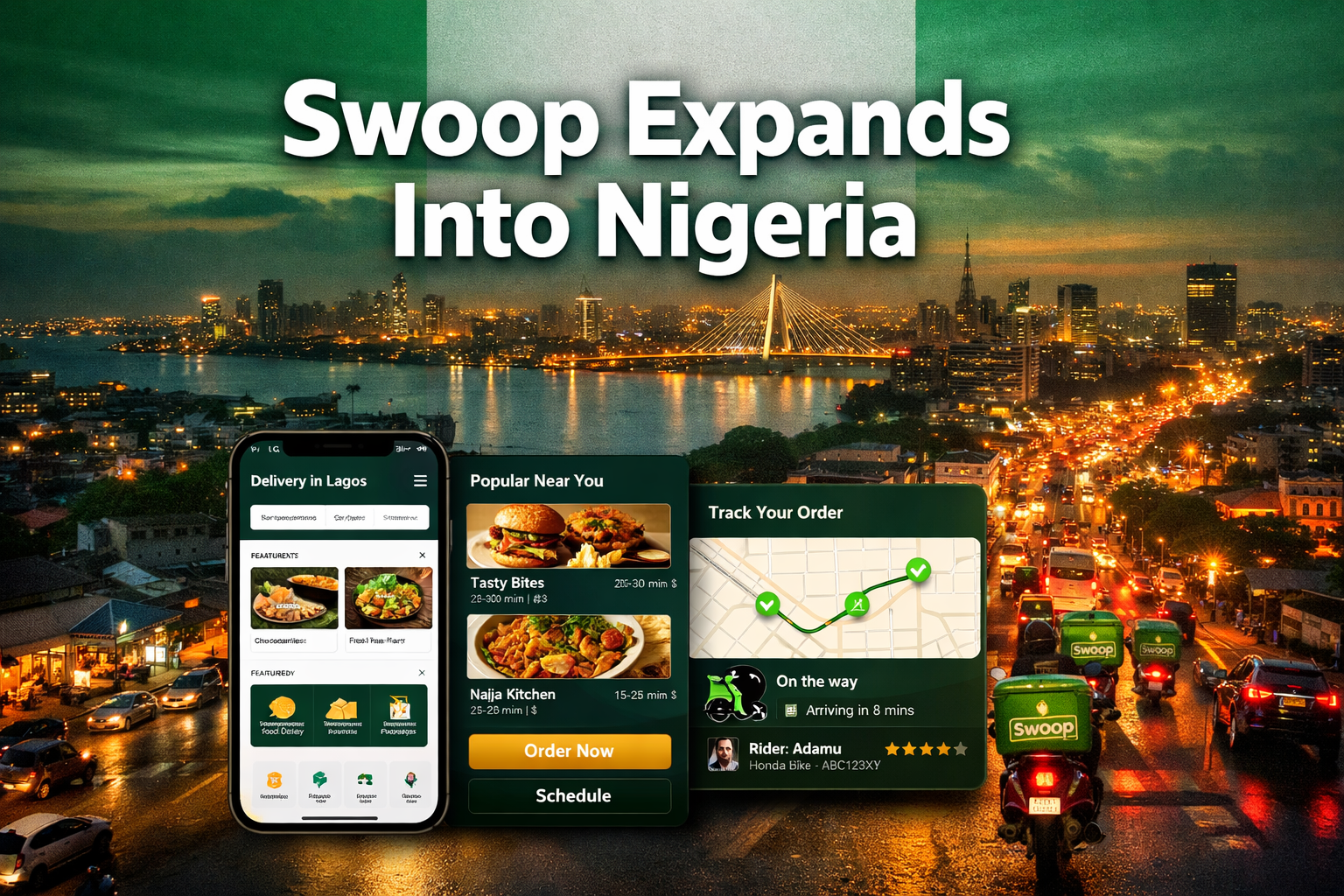
An Eswatini food delivery startup just raised one of the largest seed rounds ever disclosed by an African consumer tech company — and it is pointing that capital directly at Lagos. When Swoop expands into Nigeria, it is not just crossing a border; it is stepping into one of the most complex, crowded, and high-stakes digital consumer markets on the continent.
This story appeared in today's Nigeria tech news results and is directly relevant to anyone watching startups, digital commerce, and tech-enabled logistics in Africa. TechCabal reported on April 24, 2026 that Swoop closed a $7.3 million seed round backed by prominent Silicon Valley investors including Long Journey, Variant, Version One, Soma Capital, Dune Ventures, Zero Knowledge Ventures, Walter Kortschak, and Base Capital. The plan: launch in Yaba, Lagos, start with food delivery, and build toward a full super-app.
That is an ambitious agenda. Let's unpack what it means — for Swoop, for Nigeria's tech ecosystem, and for the consumers, riders, restaurants, and fintech partners caught in the middle.
Key Takeaways 📌
- Swoop raised $7.3M in seed funding — one of the largest disclosed seed rounds for an African consumer startup — to fuel its Nigeria launch.
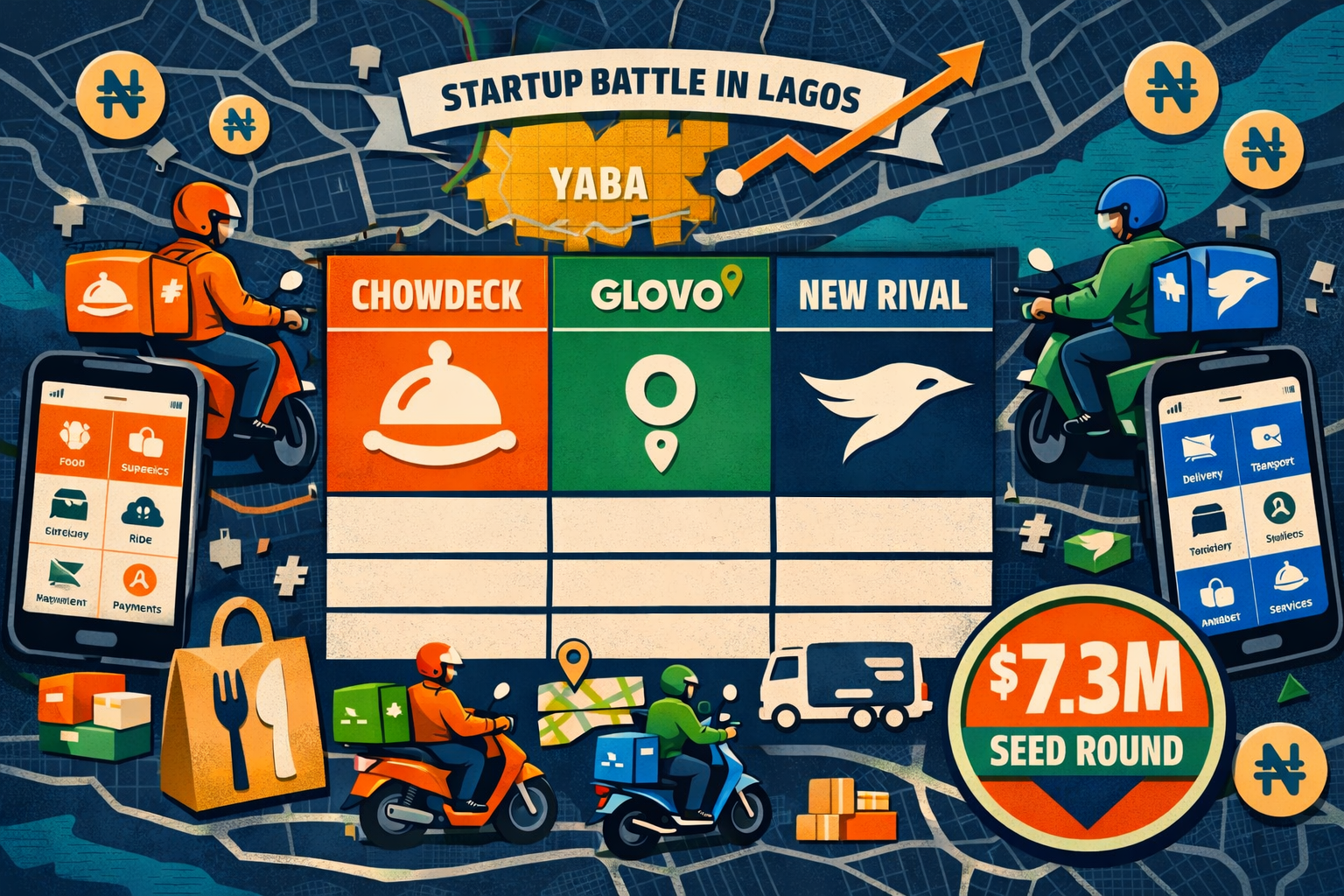
- The company is starting in Yaba, Lagos, competing directly with Chowdeck and Glovo.
- Swoop's long-term play is a super-app model, beginning with food delivery before expanding into additional verticals.
- Nigeria is attractive because of its massive urban consumer base, but it is genuinely difficult due to fragmented logistics, payment complexity, and intense competition.
- Investors are watching closely — the $7.3M seed is nearly comparable to Chowdeck's $9M Series A, raised after four years of operations.
What Happened: Swoop's $7.3M Seed Round and Nigeria Launch
Swoop began life as a food delivery platform in Eswatini, one of sub-Saharan Africa's smaller markets. That origin story makes its current move all the more striking. Rather than consolidating a comfortable position at home, the company has chosen to target Nigeria — a market roughly 3,000 kilometres away with a population exceeding 220 million and a digital economy that has already swallowed several well-funded competitors whole.
The $7.3 million seed round is the fuel for that leap. The capital is earmarked for user acquisition and infrastructure development during the initial Nigeria launch phase. Swoop's entry point is Yaba, a dense, tech-savvy neighbourhood in Lagos that is home to co-working spaces, universities, young professionals, and a thriving food scene. It is also, not coincidentally, the heart of Nigeria's startup culture — making it a logical testing ground for a new consumer app.
💬 "Raising $7.3M at seed stage — nearly matching Chowdeck's Series A after four years of operations — signals that investors see something genuinely differentiated in Swoop's approach."
The round's Silicon Valley pedigree is worth noting. Backing from firms like Variant and Version One suggests investors believe Swoop's super-app thesis has legs beyond food delivery. These are not purely Africa-focused funds making a regional bet; they are global investors placing conviction capital on a specific strategic vision.
Why Nigeria Matters: The Prize and the Problem
Nigeria is the obvious destination for any African consumer app with regional ambitions. Lagos alone has an estimated population of over 15 million people, a growing middle class, and smartphone penetration that continues to climb year over year. The country's e-commerce and food delivery sector has expanded rapidly, driven by urbanisation, a young demographic, and increasing comfort with digital payments.
But Nigeria's attractiveness is inseparable from its difficulty. Here is what makes the market both irresistible and unforgiving:
The Opportunity Side 🟢
- Massive urban consumer base: Lagos, Abuja, and Port Harcourt together represent tens of millions of potential app users.
- Young, mobile-first population: Nigeria's median age is under 20. These consumers live on their phones.
- Growing digital payment adoption: As we have covered in our analysis of how digital wallets are surpassing cash payment modes, mobile money and card payments are reshaping how Nigerians transact daily.
- Underserved demand: Despite existing players, food delivery penetration outside Lagos remains thin.
The Challenge Side 🔴
- Fragmented logistics infrastructure: Traffic congestion, poor road quality, and inconsistent addressing systems make last-mile delivery genuinely hard.
- Payment complexity: Many consumers still prefer cash on delivery, which complicates unit economics and fraud prevention.
- Regulatory environment: Nigeria's regulatory landscape for fintech, logistics, and digital platforms is active and evolving.
- Trust deficit: New platforms face consumer scepticism, especially around order accuracy, refund processes, and data privacy.
- Intense competition: Chowdeck, Glovo, and others have already invested years in building merchant relationships and dispatch networks.
| Factor | Opportunity | Risk |
|---|---|---|
| Population size | 220M+ consumers | Diverse, hard to serve uniformly |
| Digital payments | Rapid adoption | Cash-on-delivery still dominant |
| Food delivery demand | High in urban centres | Low outside Lagos/Abuja |
| Logistics network | Improvable with capital | Fragmented, unreliable last-mile |
| Regulatory environment | Maturing frameworks | Complex, fast-changing |
How Swoop's Super-App Ambition Could Work

The super-app model is not new in Africa. M-Pesa in Kenya, OPay in Nigeria, and Grab in Southeast Asia have all demonstrated that a single app can become the operating system of daily life for consumers in emerging markets. The logic is straightforward: acquire users cheaply through one high-frequency service (food delivery), then layer in payments, logistics, grocery, and financial services to increase lifetime value and reduce churn.
For Swoop, food delivery is the wedge. Yaba is the laboratory. The question is whether the company can execute well enough in that initial market to justify the broader vision.
A few things would need to go right:
1. Merchant density in Yaba 🍽️
A food delivery app is only as good as its restaurant selection. Swoop needs to sign up enough quality merchants quickly to give consumers a reason to download the app in the first place. In Yaba, this means competing for the same restaurants that Chowdeck and Glovo have already courted.
2. Dispatch reliability 🛵
Last-mile delivery in Lagos is notoriously difficult. Traffic, flooding, and security concerns all affect delivery times. Swoop will need a reliable, well-incentivised rider network from day one. Riders are not just logistics assets — they are brand ambassadors. A late or rude delivery experience kills retention faster than any competitor.
3. Payment integration 💳
Nigeria's payment ecosystem is rich but fragmented. Swoop will need to support Paystack, Flutterwave-powered flows, USSD options, and cash on delivery simultaneously. Getting this wrong means losing customers at the most critical moment — checkout.
4. Customer support 📞
Nigerian consumers are vocal and demanding. Social media complaints about food delivery apps spread fast. Swoop needs responsive, localised support infrastructure from launch day, not six months later.
5. Local partnerships 🤝
Non-Nigerian startups entering the market consistently find that local knowledge is non-negotiable. Whether that means hiring Nigerian leadership, partnering with local logistics aggregators, or working with community influencers in Yaba, cultural fluency matters as much as capital.
For more on how technology platforms are adapting their strategies across different markets, check out the latest posts on TechEmbed covering digital innovation trends.
The Competitive Landscape: Swoop Expands Into Nigeria's Crowded Arena
Swoop is not arriving in an empty market. It is entering a space where two well-established competitors have already done the hard work of educating consumers and building supply-side networks.
Chowdeck is the most direct comparison. Founded in Nigeria, Chowdeck raised a $9 million Series A in August 2025 — after four years of operations and expansion into 11 cities. The fact that Swoop has raised $7.3 million at seed stage, before its Nigeria launch, is a striking signal of investor confidence. But Chowdeck has something money cannot quickly buy: four years of operational learning, brand recognition, and merchant loyalty in the Nigerian market.
Glovo brings international scale and brand recognition. The Barcelona-based platform has operated in Lagos for several years and has the advantage of a global playbook for multi-category delivery. Its weakness, historically, has been adapting that global playbook to hyper-local Nigerian realities.
OPay and other super-app adjacent players also loom in the background. OPay has built a massive payments and logistics infrastructure in Nigeria. If Swoop's super-app ambitions eventually push it into payments or logistics-as-a-service, it will eventually brush up against OPay's ecosystem.
The competitive dynamics also extend to the innovation category of digital commerce, where platforms that combine payments, delivery, and loyalty programs are increasingly defining consumer expectations across African cities.
Risks That Could Derail Swoop's Nigeria Strategy
Even with $7.3 million in the bank and strong investor conviction, the risks are real and specific.
🚧 Unit Economics Under Pressure
Food delivery is notoriously difficult to make profitable. Subsidised delivery fees, high rider costs, and merchant commission caps can burn through capital faster than user growth can compensate. In a market where consumers are price-sensitive, the race to the bottom on delivery fees is a constant temptation.
🚧 The "Tourist Trap" Problem
Several well-funded international startups have entered Nigeria with fanfare and retreated quietly. The market has a way of exposing weaknesses that do not appear in investor decks. Swoop's Eswatini origins mean it has experience building consumer apps in Africa, but Eswatini and Lagos are operationally worlds apart.
🚧 Regulatory Surprises
Nigeria's regulatory environment for digital platforms, payments, and logistics is active. New requirements around data localisation, rider classification, or payment licensing can materially change a startup's cost structure overnight.
🚧 Talent and Retention
Building a high-performing local team in Lagos is competitive. Nigeria's tech talent is in demand globally, and retaining engineers, operations managers, and growth marketers requires more than salary — it requires a compelling mission and a culture that resonates locally.
What to Watch Next
As Swoop's Nigeria launch unfolds, here are the specific signals worth tracking:
-
Expansion beyond Yaba: How quickly does Swoop move into other Lagos neighbourhoods like Lekki, Victoria Island, or Ikeja? Speed of geographic expansion will reveal how well the Yaba pilot performed.
-
Super-app vertical launches: When does the second vertical arrive — and what is it? Grocery delivery, logistics, or payments would each signal a different strategic priority.
-
Merchant acquisition numbers: Watch for announcements about restaurant partnerships. Merchant density is the clearest early indicator of product-market fit.
-
Rider welfare policies: In a market where gig worker rights are increasingly scrutinised, how Swoop treats its dispatch riders will affect both brand perception and operational reliability.
-
Follow-on funding: Given the pace of capital deployment in user acquisition, a Series A announcement within 18 months would suggest the Nigeria bet is paying off.
Implications: What Swoop's Entry Means for Key Stakeholders
🍔 For Nigerian Consumers
More competition is almost always good news for consumers. Swoop's entry could push Chowdeck and Glovo to improve delivery times, expand restaurant selection, and offer better promotions. For Yaba residents specifically, a new well-funded platform entering the market in 2026 means more choices and potentially better pricing.
🛵 For Riders and Dispatch Workers
A new platform means new earning opportunities. But riders should watch the fine print on commission structures, insurance coverage, and dispute resolution. The gig economy in Nigeria has a mixed track record on worker protections, and a new entrant's promises at launch do not always survive contact with profitability pressures.
🍽️ For Restaurants and Merchants
New platforms bring new customer acquisition channels — but also new commission negotiations. Merchants who have built their delivery business on Chowdeck or Glovo will need to evaluate whether onboarding a third platform is worth the operational complexity. For smaller restaurants, multi-platform presence can be a lifeline; for larger chains, it is a negotiating lever.
💳 For Fintech and Logistics Partners
Swoop's super-app ambitions make it a potential partner — or eventual competitor — for Nigeria's fintech and logistics infrastructure providers. Payment processors, logistics aggregators, and last-mile technology companies should be watching this expansion closely. A well-executed super-app strategy could become a significant distribution channel; a poorly executed one could become a cautionary tale.
For context on how digital payment trends are reshaping consumer commerce across Africa, our coverage of digital wallets surpassing traditional payment modes provides useful background on the payment infrastructure Swoop will need to navigate.
Broader Context: African Consumer Apps Going Cross-Border
Swoop's move is part of a larger pattern. African consumer apps are increasingly looking beyond their home markets as local competition intensifies and investors push for larger total addressable markets. We are seeing food delivery, fintech, and logistics platforms from East Africa eyeing West Africa, and vice versa.
Nigeria, as the continent's largest economy by GDP and most populous nation, is the default destination for any platform with regional ambitions. But the graveyard of well-funded startups that entered Nigeria and failed is also a reminder that capital alone does not guarantee success.
What separates winners from cautionary tales in Nigeria tends to come down to three things: operational discipline, local leadership, and patience. The platforms that have succeeded — Paystack, Flutterwave, PiggyVest — all built deep local roots before chasing scale.
Swoop's $7.3 million gives it the runway to try. Whether it has the operational DNA to succeed is the question 2026 and 2027 will answer.
You can stay updated on the latest developments in African tech and digital commerce by following TechEmbed's trending stories and our innovation coverage.
Conclusion: A Bold Bet Worth Watching
Swoop's $7.3 million seed round and Nigeria entry is one of the more compelling African tech stories of 2026. The funding size, the investor quality, and the strategic clarity of the super-app vision all suggest this is a serious, well-resourced attempt to crack a market that has defeated many before it.
But seriousness and resources are table stakes in Lagos. What will determine Swoop's trajectory is execution — specifically in Yaba, specifically in the next 12 months.
Here is what to do with this information:
- 🔍 If you are a Nigerian consumer: Watch for Swoop's launch promotions in Yaba. Early adopters often get the best deals and the most responsive customer service.
- 🍽️ If you are a restaurant owner in Lagos: Request a merchant onboarding conversation with Swoop's team. New platforms often offer better commission terms to build supply-side density.
- 💼 If you are an investor or analyst: Track Swoop's expansion pace beyond Yaba as the clearest signal of whether the Nigeria thesis is working.
- 🛵 If you are a rider or logistics professional: Evaluate Swoop's rider terms carefully before committing exclusively to any single platform.
The story of how Swoop expands into Nigeria is just beginning. And for anyone watching African digital commerce, it is one of the most instructive case studies of 2026.
This story was selected for coverage because it appeared in today's Nigeria tech news results and is directly relevant to TechEmbed's audience of startup founders, digital commerce operators, and tech-enabled logistics professionals across Africa.


