





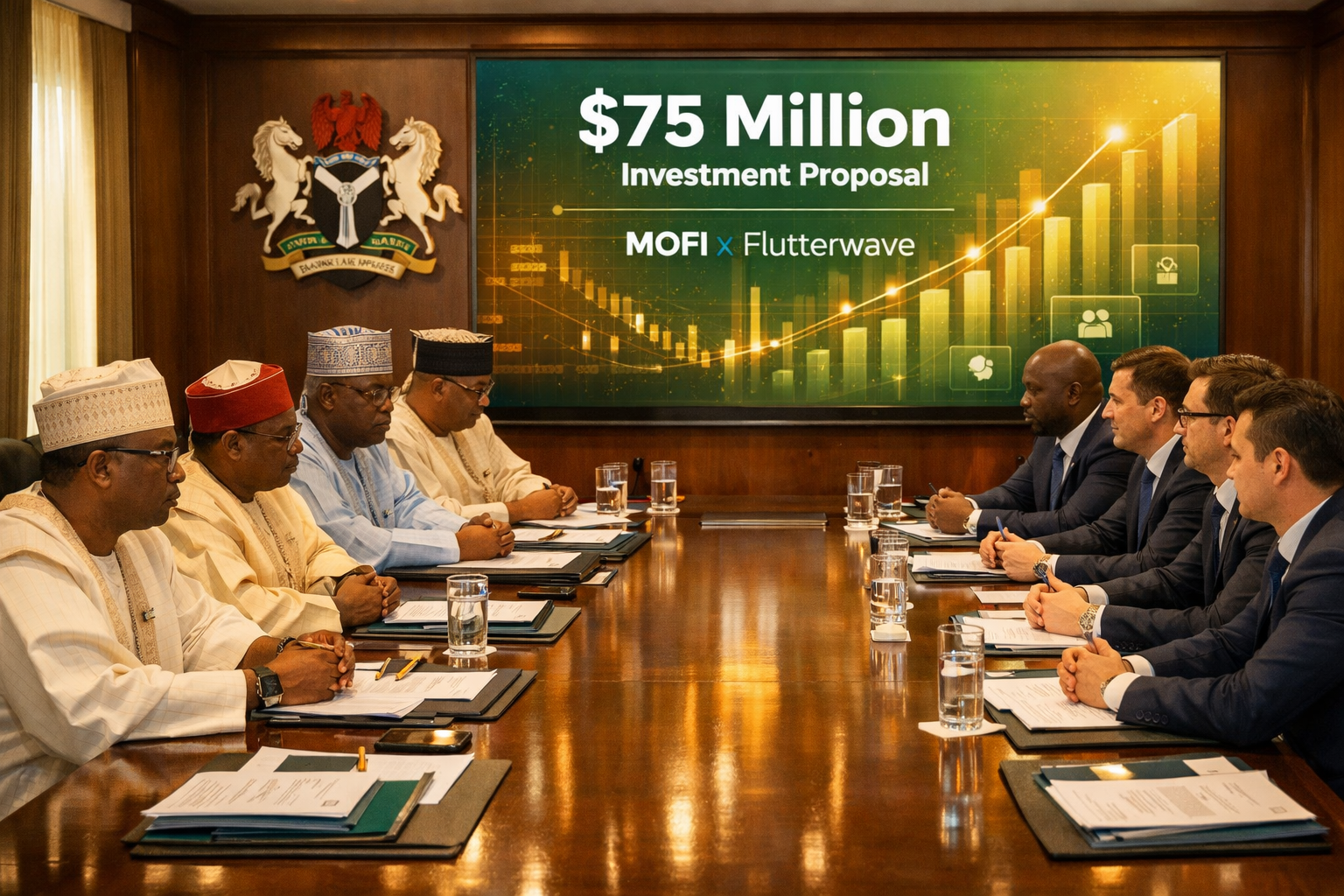

A single tweet from a presidential aide shook Nigeria's fintech world on April 20, 2026 — and then disappeared. Within hours, the story of a $75 million Nigerian government investment in Flutterwave had spread across every major publication in the country. By the end of the day, Flutterwave had denied it. Yet the meeting that sparked it all? That actually happened.
This is the story of the Flutterwave Nigeria government investment IPO 2026 saga — a tale of premature announcements, corporate caution, and what it reveals about the extraordinary ambitions Nigeria has for its digital economy. Whether the deal ultimately happens or not, the conversation it has sparked matters enormously for every Nigerian entrepreneur, investor, and digital economy enthusiast.
Let's break down exactly what we know, what remains uncertain, and why this story is bigger than one tweet.
Key Takeaways 🔑
- A tweet from a Special Assistant to President Tinubu announced a $75 million government investment in Flutterwave on April 20, 2026 — the tweet was later deleted.
- Flutterwave officially denied the reports, stating the information is "inaccurate" and that the company is "not close to an IPO."
- However, a real meeting between President Tinubu, MOFI leadership, Flutterwave, and Alami Capital did take place — confirmed on MOFI's official website.
- Flutterwave is valued at over $3 billion, has processed $40 billion in payments, and recently acquired open banking startup Mono.
- Nigeria's digital economy is valued at approximately $18 billion, with government ambitions to grow it to $450 billion — making this story about far more than one company.
What the Government Announced — And Why the Tweet Was Deleted
On the morning of April 20, 2026, a Special Assistant to President Bola Tinubu on Social Media posted a tweet that set Nigerian Twitter — and the wider fintech community — ablaze. The announcement: President Tinubu had approved a $75 million investment in Flutterwave through the Ministry of Finance Incorporated (MOFI), with a reported $250 million IPO figure also mentioned.
Within minutes, the story was everywhere. Vanguard, Punch, Business Post Nigeria, The Nation, TheCable, and Nairametrics all ran with the report. For many Nigerians watching the story unfold in real time, it felt like a watershed moment — the federal government putting serious money behind Africa's most valuable fintech startup.
Then the tweet disappeared.
No explanation was given for the deletion. No correction was issued by the presidency. The silence itself became part of the story. Was the announcement premature? Was it unauthorized? Was it accurate at all?
"The announcement was premature. The talks are real. The deal, as described, is disputed."
To understand why this matters, consider the numbers. At Nigeria's official exchange rate of N1,343.64 to the dollar, $75 million translates to approximately N100.7 billion — roughly 0.15% of Nigeria's entire 2026 budget. That is not a trivial sum. For the government to commit that kind of money to a single private tech company would be a historic move, and one that deserves far more than a social media announcement.
The hasty tweet — and its equally hasty deletion — raises serious questions about communication protocols within the presidency. In a market where investor confidence is fragile and information moves at the speed of a retweet, the way this story broke did real damage to credibility on multiple sides.
Flutterwave's Denial — What Did the Company Actually Say?
Flutterwave's response was swift and unambiguous. In a statement issued to Techpoint Africa, the company said the reports were "inaccurate." Specifically, Flutterwave pushed back on two key claims:
- ❌ The reported $75 million government investment figure
- ❌ The reported $250 million IPO — with the company stating it is "not close to an IPO"
This is a significant denial. Flutterwave is not a company that speaks carelessly. The company has been through a turbulent few years — it previously announced plans for a Nasdaq IPO in 2022, only to postpone that offering following allegations of financial irregularities and management changes. That history makes the company especially cautious about public statements regarding its capital structure and listing plans.
So when Flutterwave says it is "not close to an IPO," Nigerian investors and observers should take that seriously. The company is not ruling out a future listing — it has previously stated its intention to pursue an IPO after building a profitable, sustainable, and scalable business — but the timeline being circulated in the deleted tweet does not reflect the company's current position.
What Flutterwave did not deny, however, is that meetings with government officials took place. And that distinction is crucial.
What We Know For Sure — The Meeting That Did Happen
Here is where the story gets genuinely interesting. Despite Flutterwave's denial of the specific figures reported, the underlying meeting is confirmed.
MOFI's official website — mofi.com.ng — confirms that a meeting took place involving:
- 🏛️ President Bola Tinubu
- 💼 MOFI leadership
- 💳 Flutterwave executives
- 🤝 Alami Capital
This is not rumour. This is documented. Serious people sat in a room together and had serious conversations about Flutterwave's future, Nigeria's digital economy, and potentially the Nigerian Stock Exchange (NGX). Reports had earlier indicated that Flutterwave executives met with President Tinubu to discuss the possibility of floating the company on the NGX — a listing that would be a transformative moment for Nigeria's equity market.
Additionally, before the story broke publicly, the federal government reportedly engaged two of the Big Four global accounting firms to conduct due diligence on Flutterwave's financials. You do not hire Big Four auditors for a casual conversation. That level of professional engagement signals that the government's interest in Flutterwave is genuine, structured, and ongoing — even if no deal has been signed.
The picture that emerges is this: real talks are happening, but the announcement was premature and the specific figures reported may not be accurate. The tweet got ahead of a process that is still very much in progress.
Why Nigeria Wants a Stake in Flutterwave — The Bigger Picture
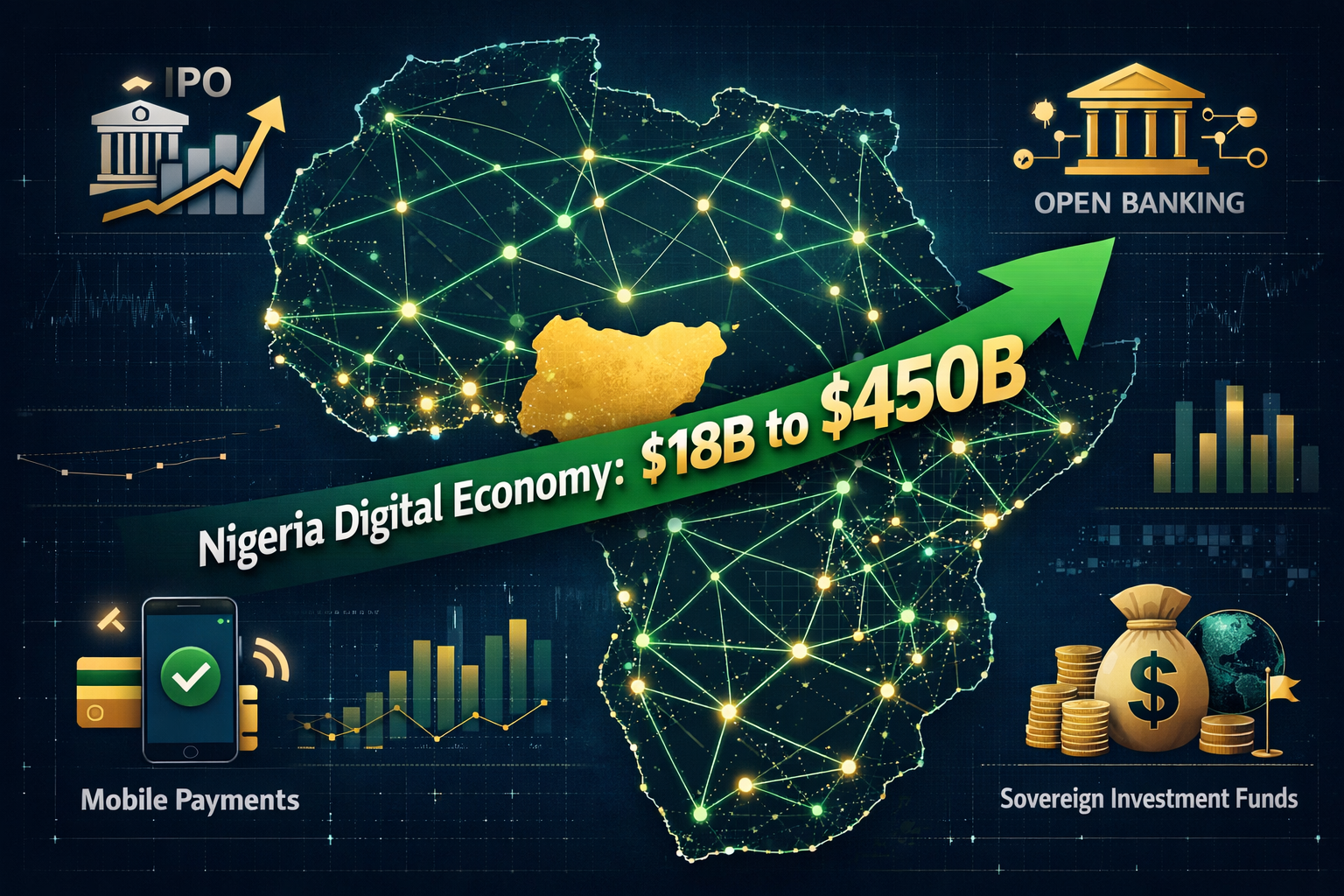
To understand why the Nigerian government would even consider a $75 million investment in a private fintech company, you need to understand the scale of what Nigeria is trying to build.
Nigeria's digital economy is currently valued at approximately $18 billion. The government's stated ambition is to grow that figure to $450 billion — a 25x increase. That is not a modest goal. It is a moonshot. And to achieve it, Nigeria needs anchor companies — globally recognized, technically sophisticated, and financially credible platforms that can attract foreign investment and demonstrate that African tech is world-class.
Flutterwave is exactly that kind of company. Consider the numbers:
| Metric | Figure |
|---|---|
| Company Valuation | $3 billion+ |
| Total Payments Processed | $40 billion+ |
| Total Transactions | 630 million+ |
| Years in Operation | ~10 years |
| Countries Active | 30+ African markets |
A government stake in Flutterwave would not just be a financial investment. It would be a strategic signal to global markets that Nigeria is serious about its digital economy. It would be the equivalent of a sovereign endorsement — telling the world that this company, built by Nigerians, is backed by the Nigerian state.
There is also a revenue logic here. If Flutterwave eventually lists on the NGX — whether through an IPO or a direct listing — a government stake acquired at the current private valuation could generate significant returns for Nigerian taxpayers. Think of it as Nigeria buying into its own success story before the rest of the world gets the chance.
MOFI's participation in the 15th West Africa Convergence Conference (WACC) 2026 as a strategic partner further signals how seriously the government is taking the digital economy agenda. This is not a one-off conversation about Flutterwave — it is part of a broader framework for government engagement with the tech sector.
For more on how Africa's digital finance landscape is evolving, explore the latest in tech coverage on TechEmbed, where we track the stories shaping the continent's innovation economy.
Flutterwave's Current Position: $3B Valuation, Mono Acquisition, and Global Recognition
Whatever the outcome of the government investment talks, one thing is clear: Flutterwave in 2026 is a fundamentally stronger company than it was two years ago.
The Mono Acquisition: A Landmark African Tech Deal
In January 2026, Flutterwave completed the acquisition of Mono, Nigeria's leading open banking startup. This was not just a business deal — it was one of the most significant fintech exits in African tech history, and it came with a critical bonus: a national microfinance banking license.
Through Mono's existing regulatory status, Flutterwave secured Central Bank of Nigeria (CBN) approval to operate banking services in Nigeria. This means Flutterwave can now:
- 🏦 Hold customer deposits
- 💰 Issue loans directly in Nigeria
- 🛡️ Offer accounts insured by the Nigeria Deposit Insurance Corporation (NDIC)
This is a transformational shift. Flutterwave has moved from being purely a payment infrastructure company to becoming a full-spectrum financial services provider. The company that once processed payments for businesses can now serve those same businesses with banking products.
$40 Billion Processed. 630 Million Transactions.
In just ten years, Flutterwave has processed over $40 billion in payments and more than 630 million transactions across its platform. These are not startup numbers — these are the metrics of a mature, globally significant financial institution.
The company is also participating in a CBN virtual-asset pilot programme, designed to strengthen oversight of digital-asset service providers and ensure compliance with anti-money laundering standards. This positions Flutterwave at the intersection of traditional finance and the emerging digital asset economy — a space that is only going to grow. You can explore more about how digital wallets and payment systems are reshaping finance in our coverage of digital wallets surpassing cash payment modes.
Stablecoins as a 2026 Strategy
Flutterwave has also identified stablecoins as a key profitability strategy for 2026, focusing on strengthening payment services and expanding global trade corridors. In a continent where currency volatility is a constant challenge for cross-border trade, stablecoins offer a practical solution — and Flutterwave is positioning itself to be the infrastructure layer for that shift.
CEO Recognition: Endeavor's 2026 Outliers Class
CEO Olugbenga 'GB' Agboola was named to Endeavor's 2026 Outliers class for the sixth consecutive year. This is not a minor accolade. Endeavor's Outliers programme recognizes the world's most impactful entrepreneurs, and six consecutive years of recognition speaks to the sustained global standing of both the CEO and the company he leads.
What a Nigeria Sovereign Investment in Fintech Would Mean for Africans
Let's step back from the controversy for a moment and ask the bigger question: if this deal does happen, what would it actually mean?
For the average Nigerian, a government investment in Flutterwave might sound abstract. But the implications are concrete and far-reaching.
🇳🇬 For Nigerian Entrepreneurs
A sovereign investment in a homegrown tech company sends a powerful message to the next generation of Nigerian founders: the government believes in you. It creates a template — if Flutterwave can attract government capital, other African startups can aspire to the same. It legitimizes the startup ecosystem in the eyes of traditional institutions that have historically been skeptical of tech companies.
📈 For the Nigerian Stock Exchange
A Flutterwave listing on the NGX would be the most significant IPO in the exchange's history. It would attract retail investors, institutional funds, and diaspora capital back into the Nigerian market. It would give ordinary Nigerians the chance to own a piece of Africa's most valuable fintech company — something currently available only to venture capital firms and high-net-worth individuals.
🌍 For Africa's Tech Credibility
When a government invests in a tech company, it signals to the world that the country's digital economy is investable. Nigeria attracting foreign direct investment into its tech sector has always been complicated by perceptions of regulatory uncertainty and political risk. A structured, transparent government investment in Flutterwave — done properly — could help shift that narrative.
The African Development Bank's approval of $200 million for Nigeria's Digital Value Chain Infrastructure (BRIDGE) project — designed to expand fibre backbone across Nigeria — shows that international development finance is already flowing into Nigeria's digital infrastructure. A MOFI investment in Flutterwave would complement that infrastructure spending with equity investment in the applications layer.
This kind of multi-level investment — infrastructure plus equity — is exactly how digital economies are built. South Korea did it. Singapore did it. Nigeria has the ambition to do it too.
Nigeria's $450 Billion Digital Economy Dream — Is It Achievable?
The number is staggering: Nigeria wants to grow its digital economy from $18 billion to $450 billion. Is this realistic?
The honest answer is: it is ambitious, but not impossible — provided the right conditions are met.
What Nigeria Has Going For It ✅
- Demographics: Nigeria has one of the youngest, most digitally native populations in the world. Over 60% of Nigerians are under 25.
- Mobile penetration: Smartphone adoption is accelerating, and mobile money is increasingly mainstream.
- Diaspora: Nigeria's diaspora sends billions in remittances annually — a natural market for fintech solutions.
- Talent: Nigerian engineers, designers, and product managers are building world-class products from Lagos to London.
- Infrastructure investment: The African Development Bank's $200 million BRIDGE project will expand fibre backbone across Nigeria, reducing the connectivity gap that has held back digital adoption in underserved regions.
What Nigeria Still Needs to Address ⚠️
- Regulatory clarity: The Flutterwave story itself illustrates the problem. Premature government announcements, deleted tweets, and corporate denials create uncertainty. Investors — both local and foreign — need predictability.
- Power infrastructure: No digital economy can thrive without reliable electricity. This remains Nigeria's most stubborn structural challenge.
- Currency stability: The naira's volatility creates real challenges for businesses operating in multiple currencies. Stablecoin adoption, which Flutterwave is pursuing, may offer a partial solution.
- Trust and transparency: The way this story unfolded — tweet, media frenzy, denial, silence — is a reminder that communication standards between government and the private sector need to improve significantly.
The $450 billion target requires not just investment, but institutional maturity. Nigeria is building that maturity in real time — and stories like this one, for all their messiness, are part of that process.
For context on how tech infrastructure investments are reshaping economies, our innovation coverage tracks the global trends that are directly relevant to Nigeria's digital ambitions.
Lessons from This Story — Transparency, Communication, and Africa's Fintech Credibility
The Flutterwave Nigeria government investment IPO 2026 saga is, at its core, a story about communication failures — and the outsized consequences they have in a hyperconnected information environment.
Here are the key lessons:
1. 📢 Premature Announcements Are Costly
A single tweet from a government aide triggered a national media storm, forced a major company to issue a public denial, and created uncertainty in the market. In the age of instant information, the cost of saying something before it is ready to be said is enormous.
2. 🤝 The Gap Between Talks and Deals Must Be Respected
The meeting between MOFI, Flutterwave, and Alami Capital was real. The due diligence by Big Four firms was real. But none of that means a deal is done. The Nigerian government — and its communications staff — need to understand the difference between exploratory discussions and signed agreements.
3. 🌐 Africa's Fintech Credibility Is a Collective Asset
When stories like this create confusion, it is not just Flutterwave's reputation that takes a hit. It is the entire African fintech ecosystem. Every investor watching this story from London, New York, or Singapore is making mental notes about the reliability of information coming out of Nigeria. Getting this right matters for everyone.
4. 💡 Flutterwave's Response Was Measured and Professional
The company's decision to issue a clear, factual denial — without attacking the government or creating unnecessary drama — was the right call. It protected the company's credibility while leaving the door open for future discussions. That kind of corporate maturity is exactly what you want to see from a company that aspires to be publicly listed.
For those interested in how digital financial platforms are navigating regulatory environments globally, our piece on Apple pulling trading apps from its App Store offers a useful parallel on how regulatory decisions impact fintech platforms.
Frequently Asked Questions (FAQ) 🙋
Q1: Did Nigeria's government actually invest $75 million in Flutterwave?
No confirmed deal has been announced. A tweet claiming President Tinubu approved the investment was deleted, and Flutterwave has denied the reports. However, meetings between government officials and Flutterwave did take place, as confirmed on MOFI's website.
Q2: Is Flutterwave planning an IPO in 2026?
Flutterwave has explicitly stated it is "not close to an IPO." The company has previously expressed interest in a future listing but says the reported $250 million IPO figure is inaccurate.
Q3: What is Flutterwave worth right now?
Flutterwave is currently valued at over $3 billion, making it one of Africa's most valuable tech startups and the continent's most valuable fintech company.
Q4: What is MOFI and why is it involved?
The Ministry of Finance Incorporated (MOFI) is the Nigerian government entity responsible for managing the government's equity investments in companies. Its involvement in talks with Flutterwave suggests the government is exploring a formal equity stake, not just a policy partnership.
Q5: What did Flutterwave gain from acquiring Mono?
Through the January 2026 acquisition of Mono, Flutterwave gained access to open banking technology and, critically, a national microfinance banking license approved by the Central Bank of Nigeria. This allows Flutterwave to hold deposits, issue loans, and offer NDIC-insured accounts.
Q6: How much is $75 million in naira?
At Nigeria's official exchange rate of N1,343.64 per dollar, $75 million equals approximately N100.7 billion — about 0.15% of Nigeria's 2026 budget.
Q7: Why would the government want to invest in a private tech company?
The government's stated goal is to grow Nigeria's digital economy from $18 billion to $450 billion. Investing in Flutterwave would be a strategic move to anchor that growth around a globally recognized, Nigerian-founded company — while potentially generating returns if the company eventually goes public.
Q8: What is Alami Capital and what is its role?
Alami Capital was present at the meeting between President Tinubu and Flutterwave. While the exact nature of its involvement has not been publicly detailed, its presence suggests it may be playing an advisory or co-investment role in the discussions.
Q9: Has Flutterwave had regulatory problems before?
Yes. In 2022, Flutterwave postponed its planned Nasdaq IPO following allegations of financial irregularities and management changes. The company has since worked to address those issues, secured new regulatory approvals including its banking license, and rebuilt its compliance infrastructure.
Q10: What does this mean for ordinary Nigerians?
If a government investment ultimately leads to a Flutterwave listing on the Nigerian Stock Exchange, ordinary Nigerians could have the opportunity to buy shares in Africa's most valuable fintech company — turning a corporate success story into a vehicle for public wealth creation.
Conclusion: What This Means for Nigeria's Fintech Future
The Flutterwave Nigeria government investment IPO 2026 story is messy, unresolved, and — in the best possible way — enormously important.
Here is what we know with confidence: Nigeria has a $3 billion fintech champion. The government is serious enough about the digital economy to hold high-level meetings and engage Big Four auditors. Flutterwave has a banking license, a landmark acquisition, $40 billion in processed payments, and a CEO recognized globally for six consecutive years. The African Development Bank is pouring $200 million into Nigeria's digital infrastructure. The ingredients for something historic are all present.
What is missing — for now — is the discipline, transparency, and institutional maturity to translate ambition into structured, credible action. The deleted tweet was not just a communications blunder. It was a symptom of a system that is still learning how to operate at the speed and scale that Nigeria's digital economy ambitions demand.
The optimistic reading of this story is that Nigeria is figuring it out in real time. The meetings are happening. The due diligence is being done. The conversations between government and Africa's most valuable fintech startup are real. That is genuinely exciting.
The cautionary reading is that premature announcements, corporate denials, and information vacuums erode the trust that Nigeria needs to attract the global capital required to reach that $450 billion target.
Actionable Next Steps for Our Readers:
- 📌 Entrepreneurs: Watch how MOFI structures its engagement with tech companies — this is a template for government-startup partnerships in Nigeria.
- 📌 Investors: Track Flutterwave's regulatory progress and any NGX listing announcements — this is a company worth following closely.
- 📌 Policy watchers: Advocate for clearer communication protocols between government communications staff and the private sector.
- 📌 Digital economy enthusiasts: Stay informed. Nigeria's path to a $450 billion digital economy will be built on stories like this one — complex, contested, and ultimately transformative.
We will continue tracking the Flutterwave Nigeria government investment IPO 2026 story as it develops. Follow TechEmbed for the latest updates, analysis, and breaking news from Africa's digital economy frontlines. You can also check out our trending stories for the most important tech narratives shaping Nigeria and the continent right now.
Africa's fintech future is being written right now. And Nigeria — for all its complexity — is holding the pen.
Published by TechEmbed — Africa's Trusted Tech Media Platform


