


Over ₦52 billion was lost to fraud in Nigeria's banking sector in just one year. A big chunk of that came from SIM-related scams. Fraudsters swap SIMs, recycle old numbers, and hijack bank accounts. It has been going on for years. But in 2026, Nigeria's two biggest regulators finally said: enough.
The CBN NCC SIM fraud Nigeria 2026 story is about a landmark agreement between the Central Bank of Nigeria (CBN) and the Nigerian Communications Commission (NCC). Together, they are building a system to stop SIM fraud before it happens. This is not just another press release. It is a real, technical solution with real teeth.
Let me break it all down for you — simply and clearly.
Key Takeaways 📌
- CBN and NCC signed an MOU on April 20, 2026, to fight SIM-related fraud in Nigeria.
- A new portal called TIRMS (Telecom Identity Risk Management System) will check phone numbers in real time before transactions go through.
- The system can detect recycled, swapped, or blacklisted SIM numbers instantly.
- Two joint committees were set up to manage the partnership between the financial and telecom sectors.
- Telecom operators must give 14 days' notice before deactivating a subscriber line.
Why SIM Fraud Is Such a Big Problem in Nigeria
Let's be honest. Your phone number is basically your identity in Nigeria's digital economy.
You use it to receive OTPs. You use it to verify bank transfers. You use it to reset passwords. If someone gets control of your number, they can get into your bank account. Simple as that.
This is exactly what fraudsters exploit. And they do it in several ways.
How SIM Fraud Actually Works
Here are the most common tricks:
| Fraud Type | What Happens |
|---|---|
| SIM Swap | Fraudster convinces a telecom agent to transfer your number to a new SIM |
| SIM Recycling | Your old number gets reassigned to someone else — who then accesses your bank alerts |
| SIM Cloning | A duplicate SIM is created with your number |
| Social Engineering | Fraudster tricks you into giving out your OTP |
The SIM recycling issue is especially sneaky. When you abandon a phone number, the telecom company can give that number to a new user. If your bank account is still linked to that old number, the new user can receive your OTPs. They can reset your password. They can drain your account. And they may not even be a criminal — they just got a number that used to be yours.
💬 "Mobile numbers are the backbone of digital identity in Nigeria. When that backbone is compromised, everything falls apart."
This is why the CBN NCC SIM fraud Nigeria 2026 initiative is such a big deal. It directly attacks this weak point.
What CBN and NCC Actually Did in 2026
On April 20, 2026, the CBN and NCC signed a Memorandum of Understanding (MOU) at the CBN headquarters in Abuja. This was not just a handshake. It was a formal, documented commitment between two powerful regulators.
The agreement covers banks, fintechs, mobile network operators, and payment providers. Everyone in Nigeria's digital financial ecosystem is involved.
The TIRMS Portal: The Heart of the Plan
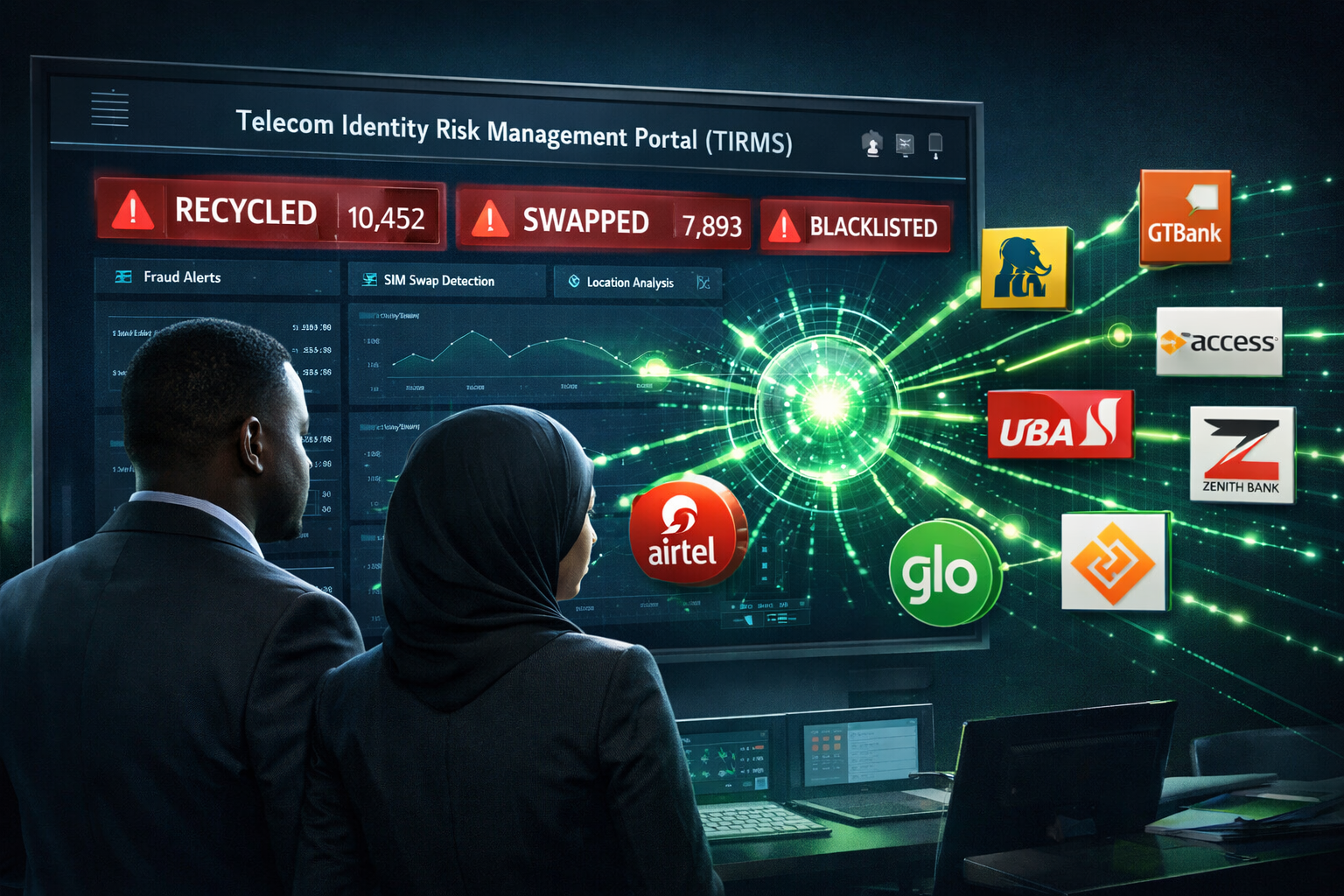
The centerpiece of this agreement is the Telecom Identity Risk Management System (TIRMS) Portal.
Think of it as a real-time database that knows the status of every phone number in Nigeria. Before a bank allows a transaction, it can check that number on TIRMS. The portal will tell the bank:
- ✅ Is this number active?
- 🔄 Has this number been swapped recently?
- 🔁 Has this number been recycled and given to someone else?
- 🚫 Has this number been blacklisted for suspicious activity?
- ❌ Has this number been disconnected?
If the number has been swapped or recycled, the bank can pause the transaction. It can ask for more verification. It can protect the customer before money moves.
This is powerful. This is real-time fraud prevention.
Who Uses the TIRMS Portal?
The portal is designed for:
- Commercial banks (like GTBank, Access Bank, Zenith, UBA)
- Fintechs (like Opay, Kuda, Moniepoint, PalmPay)
- Mobile network operators (MTN, Airtel, Glo, 9mobile)
- Payment service providers
All of them feed data into TIRMS. All of them can query it. It becomes a shared intelligence system for the entire industry.
You can learn more about how digital wallets are changing payment systems in Nigeria at our article on how digital wallets are expected to surpass cash payment modes.
The Rules Telecom Operators Must Follow
The MOU does not just create a portal. It also sets clear rules for telecom operators. These rules are strict. And they matter a lot.
14-Day Deactivation Notice Rule
Before a telecom company deactivates your SIM line, they must give you 14 days' notice. This gives you time to:
- Update your bank account with a new number
- Alert your financial institutions
- Protect your accounts before the number goes dark
This one rule alone could prevent thousands of fraud cases every year.
7-Day Data Submission Rule
When a phone number is recycled — meaning it is given to a new user — the telecom operator must submit that data to TIRMS within seven days. This keeps the portal up to date.
Without this rule, there could be a gap. A fraudster could exploit that gap. The seven-day rule closes it.
Why These Rules Matter
Before this MOU, there was no standard rule. Telecom companies could recycle numbers whenever they wanted. Banks had no way to know. Customers had no protection.
Now there is a system. Now there are rules. Now there is accountability.
The Two Joint Committees: Who Is Watching?
A system is only as good as the people running it. The CBN and NCC knew this. So they set up two joint committees to oversee everything.
Committee 1: Joint Committee on Payment Systems & Consumer Protection
This committee focuses on:
- Making sure the payment system stays safe
- Protecting consumers from fraud
- Handling complaints and disputes
- Creating awareness campaigns for ordinary Nigerians
Committee 2: Joint Committee on Telecoms Identity Risk Management System (TIRMS) Portal
This committee focuses on:
- Managing and maintaining the TIRMS portal
- Making sure data is accurate and up to date
- Coordinating between banks and telecom operators
- Solving technical problems as they come up
These two committees create a formal structure. They make sure the MOU does not just gather dust on a shelf. They keep the system alive and working.
The 20-Page Framework: What Is Inside?
The CBN and NCC did not just sign an MOU and walk away. They also developed a 20-page draft framework to guide implementation.
This framework was built with input from:
- Banks
- Mobile network operators
- Payment service providers
- Fintech companies
It covers everything from data sharing protocols to consumer rights. It is a detailed roadmap for how the system will work in practice.
Data Protection Is Built In
One concern many Nigerians have is: what happens to my data?
The framework addresses this directly. The TIRMS portal uses:
- 🔐 Encryption — your data is protected in transit and at rest
- ✅ Consent protocols — your information is not shared without proper authorization
- 🛡️ Regulatory oversight — both CBN and NCC supervise how data is used
This is important. Nigeria's data protection laws are getting stronger. The TIRMS system was designed to comply with those laws from the start.
For more on how technology is being used to track and protect digital identities, see our piece on the new rules for registering IMEI numbers for tracking lost phones.
What the Regulators Said
NCC Executive Vice Chairman: Dr. Aminu Maida
Dr. Maida was clear about what TIRMS means for Nigeria. He said the platform gives "a unified framework for managing risks tied to mobile numbers." He added that "financial institutions will now have enhanced visibility into the status of phone numbers."
That is a big deal. Before TIRMS, banks were flying blind. They had no way to know if a phone number linked to an account had been swapped or recycled. Now they can check. Now they can act.
CBN Governor: Olayemi Cardoso
Governor Cardoso committed to several key actions under the MOU. These include:
- Stronger authentication for high-risk transactions
- Better transaction monitoring across the financial system
- Functional fraud reporting channels for consumers
- Consumer education programs — especially for underserved communities and small businesses (MSMEs)
The focus on MSMEs and underserved Nigerians is important. These groups are often the most vulnerable to SIM fraud. They may not have the resources to recover from financial losses. The CBN is specifically targeting protection for them.
CBN NCC SIM Fraud Nigeria 2026: The Timeline
Here is a quick timeline of how this initiative developed:
| Date | What Happened |
|---|---|
| February 27, 2026 | NCC announced plans for a cross-sector fraud tracking system |
| April 20, 2026 | CBN and NCC signed the MOU at CBN headquarters, Abuja |
| April 2026 onwards | TIRMS portal development and committee formation begins |
| Ongoing | 20-page framework being finalized with industry stakeholders |
The initiative moved fast. From announcement to MOU signing took less than two months. That shows how serious both regulators are about this problem.
Concerns and Challenges: Is It All Perfect?
No system is perfect. And to be fair, there are real concerns about this initiative.
MTN's Warning About Duplication
MTN Nigeria raised a concern during the planning phase. They warned that TIRMS could duplicate existing solutions already in place. MTN also flagged the risk of low adoption rates from stakeholders.
This is a valid point. Nigeria has seen many tech initiatives that looked great on paper but failed in practice. If banks and fintechs do not actively use the TIRMS portal, it becomes useless.
The joint committees will need to address this. They need to make sure adoption is mandatory, not optional.
Data Quality Problems
Another challenge is data quality. Many Nigerians did not provide email addresses when registering their SIMs. Many NIN (National Identity Number) records are incomplete or inaccurate. If the underlying data is bad, TIRMS may give wrong results.
The system needs clean, reliable data to work. This is an ongoing challenge for Nigeria's digital infrastructure.
Coordination Across Many Players
Getting banks, fintechs, and telecom operators to all work together is not easy. Each has its own systems, its own priorities, and its own concerns. The joint committees have a tough job ahead.
But the fact that a formal structure exists is already progress. Before this MOU, there was no structure at all.
What This Means for You as a Nigerian Consumer
You might be wondering: what does all this mean for me?
Here is the practical impact on your daily life:
🔒 Your Bank Account Is Safer
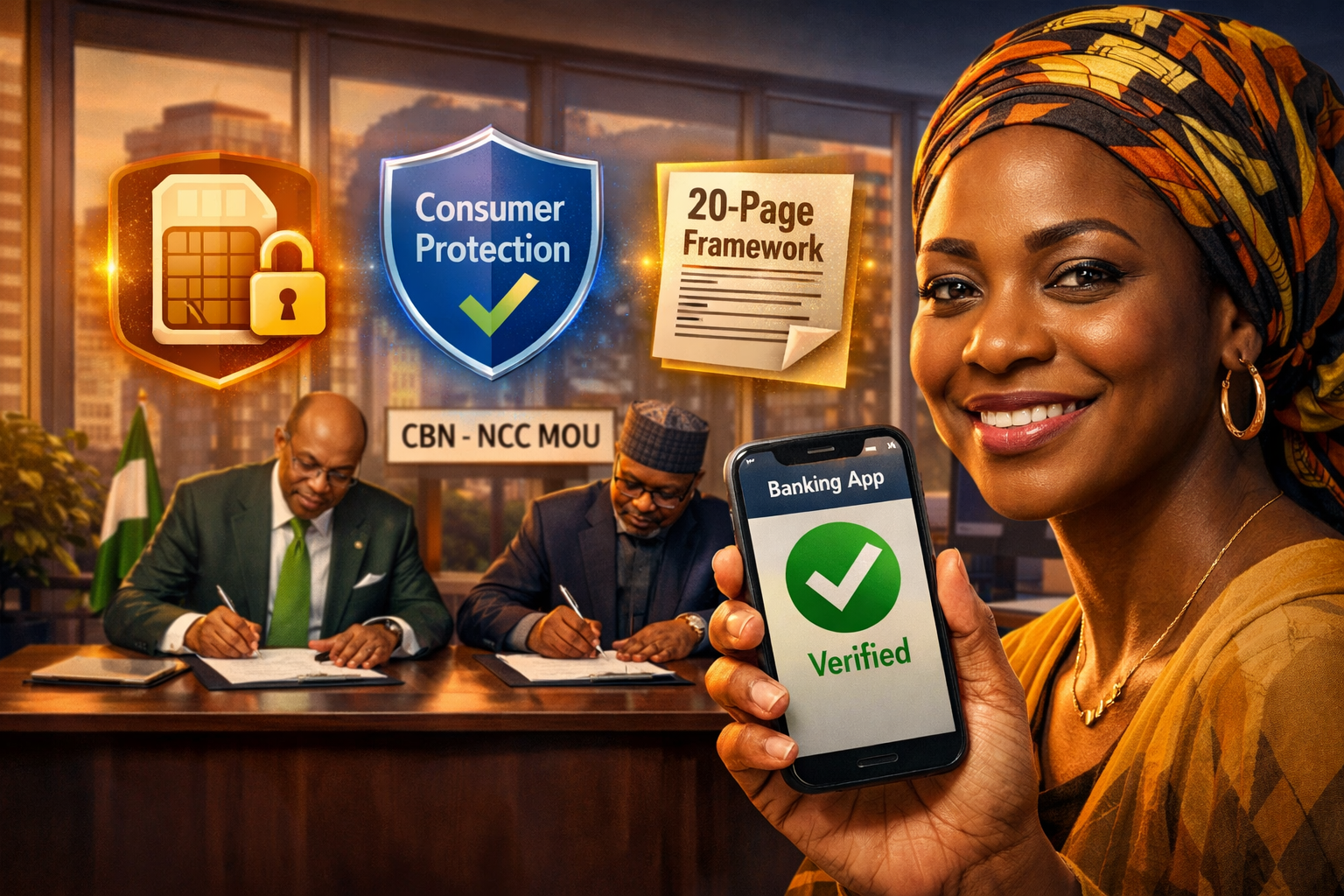
When you make a transfer or log into your banking app, your bank can now check if your phone number has been compromised. If it has, the bank can stop the transaction and contact you.
📱 You Get More Warning Before Your Number Is Deactivated
Thanks to the 14-day notice rule, you will know in advance if your SIM is being deactivated. You have time to act. You can protect your accounts before anything bad happens.
🚨 Fraud Happens Less Often
When fraudsters know that recycled or swapped numbers are flagged in real time, they lose their advantage. The system makes SIM-based fraud much harder to pull off.
📣 You Have Better Ways to Report Fraud
Governor Cardoso committed to building better fraud reporting channels. If something goes wrong, you will have a clear path to report it and get help.
This is especially important for people in rural areas and small business owners who may not know how to navigate the current system.
You can also explore how innovation in fintech and digital payments is reshaping financial security across Africa.
How Does This Compare to Other Countries?
Nigeria is not the first country to tackle SIM fraud with a centralized system. But the scale of the CBN-NCC collaboration is impressive.
🇬🇧 United Kingdom
The UK has a SIM Swap Detection API used by banks to check if a SIM has been recently swapped before processing a transaction. It has reduced SIM swap fraud significantly.
🇿🇦 South Africa
South Africa uses a system called SIM Swap Verification through the major banks and telecom operators. It works similarly to what Nigeria is building.
🇰🇪 Kenya
Kenya's M-Pesa has built-in fraud detection that monitors unusual transaction patterns tied to phone numbers.
Nigeria's TIRMS is more ambitious than most of these. It covers the entire financial and telecom ecosystem. It is centralized and regulatory-backed. If it works as planned, it could become a model for other African countries.
💬 "What Nigeria is building with TIRMS could be the most comprehensive SIM fraud prevention system on the African continent."
What You Should Do Right Now to Protect Yourself
While TIRMS is being rolled out, you can take steps today to protect yourself from SIM fraud.
Here is a simple checklist:
- Update your bank with your current phone number — make sure your active number is linked to your accounts
- Enable extra security on your banking apps — use biometrics or PINs in addition to OTPs
- Do not share OTPs with anyone, ever — not even "bank staff"
- Check your SIM status regularly — if you notice you have lost network suddenly, call your telecom provider immediately
- Register your NIN properly — make sure your NIN is correctly linked to your SIM
- Report suspicious activity to your bank and the NCC immediately
- Avoid using old or abandoned numbers for banking — if you have not used a number in months, it may have been recycled
Also, be aware that decentralized VPNs and privacy tools can add another layer of digital security when you are banking online.
CBN NCC SIM Fraud Nigeria 2026: The Bigger Picture
This MOU is part of a bigger story. Nigeria is building a serious digital economy. Mobile money is growing fast. Fintechs are serving millions of unbanked Nigerians. Digital payments are becoming the norm.
But a digital economy needs trust. And trust needs security. SIM fraud destroys trust. It makes people afraid to use digital banking. It pushes people back to cash.
The CBN NCC SIM fraud Nigeria 2026 initiative is about more than stopping criminals. It is about building the foundation of trust that Nigeria's digital economy needs to grow.
When people know their phone numbers are protected, they use digital banking more confidently. When businesses know their transactions are secure, they invest more in digital infrastructure. The ripple effects are enormous.
You can also read about how mobile phone technology and infrastructure continues to evolve as the backbone of modern digital finance.
Frequently Asked Questions (FAQs)
Q: What is TIRMS?
TIRMS stands for Telecom Identity Risk Management System. It is a real-time portal that checks the status of phone numbers across Nigeria's banks and telecom networks.
Q: When did CBN and NCC sign the MOU?
They signed it on April 20, 2026, at the CBN headquarters in Abuja.
Q: Will my data be safe on TIRMS?
Yes. The system uses encryption and consent protocols. It was designed to comply with Nigeria's data protection laws.
Q: Does this affect all Nigerian banks?
Yes. The system covers commercial banks, fintechs, and payment service providers across Nigeria.
Q: What happens if my number gets flagged by TIRMS?
Your bank may pause a transaction and contact you for additional verification. This is to protect you, not punish you.
Q: Can I still use my old phone number for banking?
Yes, but make sure it is active and properly registered. If you have abandoned a number, update your bank records with your current active number.
Conclusion: A Safer Digital Nigeria Is Within Reach
The CBN NCC SIM fraud Nigeria 2026 MOU is one of the most important steps Nigeria has taken to protect its digital economy. It is practical. It is technical. And it involves everyone who matters — banks, fintechs, telecom operators, and regulators.
The TIRMS portal is the real game-changer. Real-time phone number verification means fraudsters can no longer hide behind recycled or swapped SIMs. The 14-day deactivation notice and 7-day data submission rules add extra layers of protection.
Yes, there are challenges. Data quality is a problem. Adoption must be enforced. The joint committees have hard work ahead. But the framework is solid. The political will is there. And the technology is ready.
Your Next Steps ✅
- Update your bank records with your current, active phone number today.
- Enable all security features on your banking apps.
- Never share OTPs with anyone.
- Report fraud immediately to your bank and the NCC.
- Stay informed — follow updates from CBN and NCC on TIRMS rollout.
Nigeria's digital economy is growing. With the right protections in place, it can grow safely. The CBN and NCC have taken a big step. Now it is time for all of us — banks, telecom operators, and ordinary Nigerians — to play our part.
Stay safe. Stay informed. And protect your money. 💚
